

The Power of One: Why a Unified Data Strategy is Your Greatest Competitive Advantage
 يوليو 22, 2025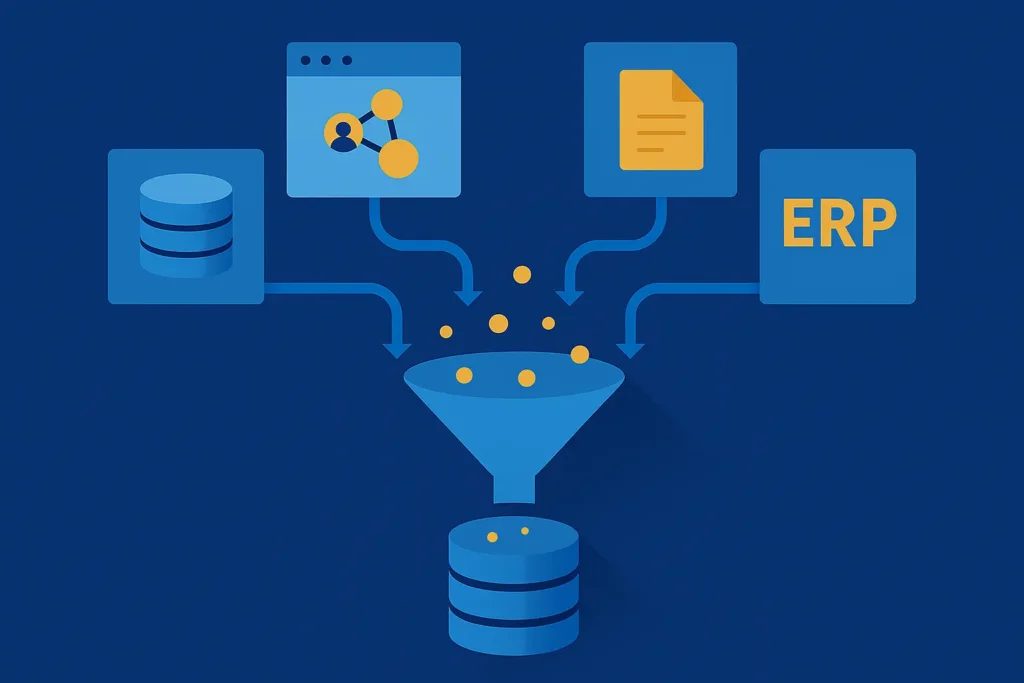
In the modern enterprise, data is everywhere. It is in your CRM, your ERP, your financial systems, and in countless documents and spreadsheets across your organization. While each of these systems is valuable on its own, their real power is locked away. When data lives in disconnected silos, your organization is forced to operate with a fragmented and often contradictory view of reality.
A unified data strategy, powered by a modern integration and data management platform, breaks down these silos. It creates a single, trusted source of truth that aligns your entire organization, fuels intelligent automation, and empowers your teams to make smarter, more confident decisions.
- The Problem with Data Silos
Data silos are the natural result of business growth. Different departments adopt the best tools for their specific needs, but these systems are rarely designed to talk to each other. This leads to significant challenges:
- Inconsistent Information: Your sales team’s customer data in the CRM may not match the finance team’s billing data in the ERP, leading to confusion and errors.
- Massive Inefficiency: Employees are forced to spend hours manually copying data between systems or trying to reconcile conflicting reports, wasting time that could be spent on strategic work.
- Failed Automation: You cannot create a true end to end automated process, like “Quote to Cash,” if your systems cannot communicate seamlessly. Manual handoffs between systems create bottlenecks and break the flow of automation.
- Achieving a True 360-Degree View
The first step in a unified data strategy is integration. A modern data integration platform acts as the central nervous system for your enterprise, connecting all your applications and orchestrating the flow of information between them.
This allows you to create a comprehensive, 360-degree view of your core business entities. For example, by unifying data from your sales, marketing, and service systems, you can build a single, complete profile of every customer, enabling more personalized service and targeted marketing.
“A 360-degree view of your customer is not just a marketing buzzword. It is a fundamental requirement for delivering a modern, personalized, and competitive customer experience.”
- The Critical Importance of Data Quality
Connecting your systems is only half the battle. If you are moving “bad data” between them, you are simply automating the spread of errors. The principle of “garbage in, garbage out” has never been more true.
A robust data strategy must therefore include data management and processing. This involves automatically cleansing, validating, and standardizing your data as it moves between systems. By eliminating duplicates, correcting inaccuracies, and enforcing consistent formats, you build a foundation of high quality, trustworthy data that everyone in the organization can rely on.
- Fueling Analytics and AI
The ultimate goal of a unified data strategy is to enable better, faster decision making. When all your data is integrated and clean, you can finally trust the insights from your analytics and Business Intelligence platforms.
Furthermore, high quality, unified data is the essential prerequisite for any successful Artificial Intelligence initiative. AI and machine learning models are only as good as the data they are trained on. A unified data strategy provides the clean, reliable, and holistic dataset needed to power advanced analytics and predictive insights.
From Fragmentation to Foundation
Breaking down data silos is one of the most impactful initiatives a modern business can undertake. By creating a unified data foundation, you can boost operational efficiency, enable powerful automation, and unlock the insights needed to outmaneuver your competition.
Unify your enterprise and unleash the power of your connected data with our integrated data platform.


