

Is Your Most Valuable Asset Walking Out the Door? The Business Case for Knowledge Management
 مايو 26, 2025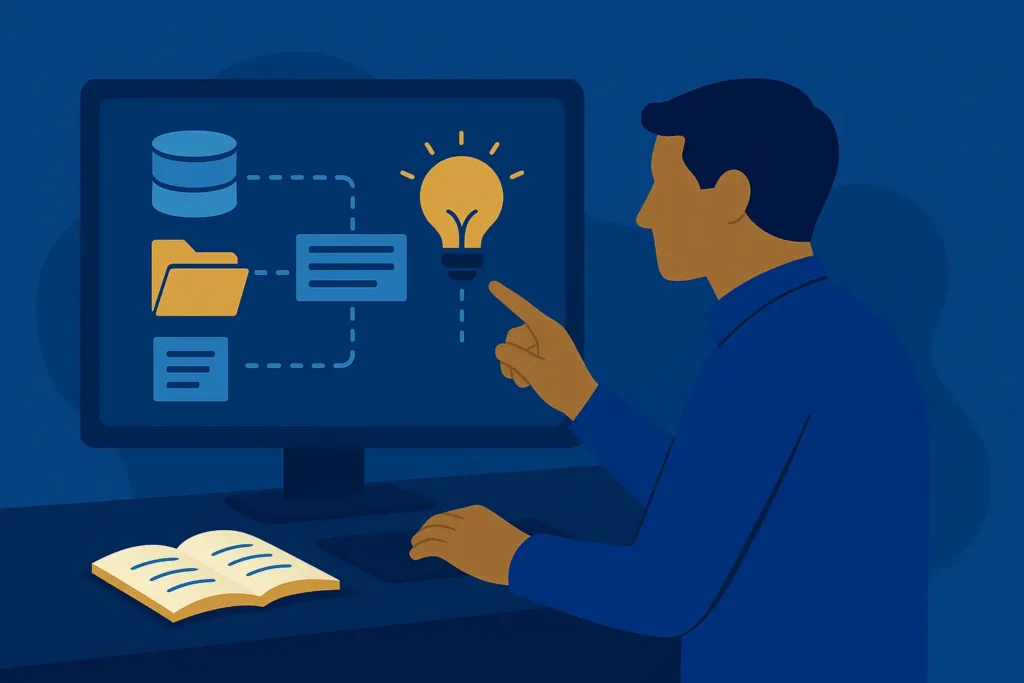
Every organization has its experts. They are the seasoned veterans who know how to solve the difficult problems, navigate the complex processes, and answer the tough customer questions. This expertise, built up over years of experience, is one of your company’s most valuable and irreplaceable assets.
But what happens when these employees leave, retire, or simply move to another department? Too often, their critical knowledge walks out the door with them, never to be recovered. This phenomenon, known as “brain drain,” is a silent killer of productivity and a major risk to long term business continuity. A strategic approach to Knowledge Management is the only effective defense.
- The High Cost of Reinventing the Wheel
When institutional knowledge is not captured and shared, your teams are forced to solve the same problems repeatedly. A junior employee might spend a week struggling with an issue that a senior colleague had already solved a year ago. This constant “reinventing the wheel” is a massive drain on productivity and a source of immense frustration.
Without a central place to find best practices, proven solutions, and lessons learned, you are paying for the same learning curve again and again.
- When Your Experts Become a Bottleneck
In many organizations, critical knowledge is held by just a few key individuals. These experts quickly become a bottleneck, constantly interrupted by questions from colleagues who need their help. While they are busy answering the same questions repeatedly, they are unable to focus on the high value, strategic work they were hired to do.
This reliance on a few individuals also creates a single point of failure. If that expert is on vacation or leaves the company, the entire process can grind to a halt.
“If your company’s success depends on the memory of a few key people, your business is more fragile than you think.”
- The Challenge of Onboarding New Hires
Bringing a new employee up to speed is a time-consuming and expensive process. In an environment without a structured knowledge base, new hires are forced to learn by relying on tribal knowledge, interrupting busy colleagues with endless questions and hoping they can piece together the information they need to do their job.
This leads to a longer time to productivity, a higher likelihood of errors, and a frustrating initial experience for your new talent.
- Building a Collective Brain with Knowledge Management
A modern Knowledge Management platform provides the tools to systematically capture, organize, and share your organization’s collective expertise, transforming it from a fragile, individual asset into a robust, institutional one.
- Capture Best Practices: It provides simple tools for your experts to document their processes and solutions in a central, searchable knowledge base.
- Empower Self Service: It gives all employees a single place to find instant answers to their questions, allowing them to solve problems on their own without having to interrupt an expert.
- Accelerate Onboarding: It provides new hires with a structured, self-service resource to learn the ropes, dramatically accelerating their time to productivity.
- Foster Collaboration: It creates a culture of knowledge sharing, where everyone is encouraged to contribute their expertise and learn from the collective wisdom of the organization.
Protecting Your Most Valuable Asset
Your organization’s knowledge is too valuable to be left to chance. By implementing a strategic approach to Knowledge Management, you can mitigate the risks of brain drain, boost your team’s productivity, and build a more resilient and intelligent organization.
Harness your collective intelligence and protect your institutional memory with our integrated Knowledge Management solution.


