Closing the ‘Innovation Gap’: How Low-Code is Empowering Business Teams to Solve Their Own Problems
 November 18, 2025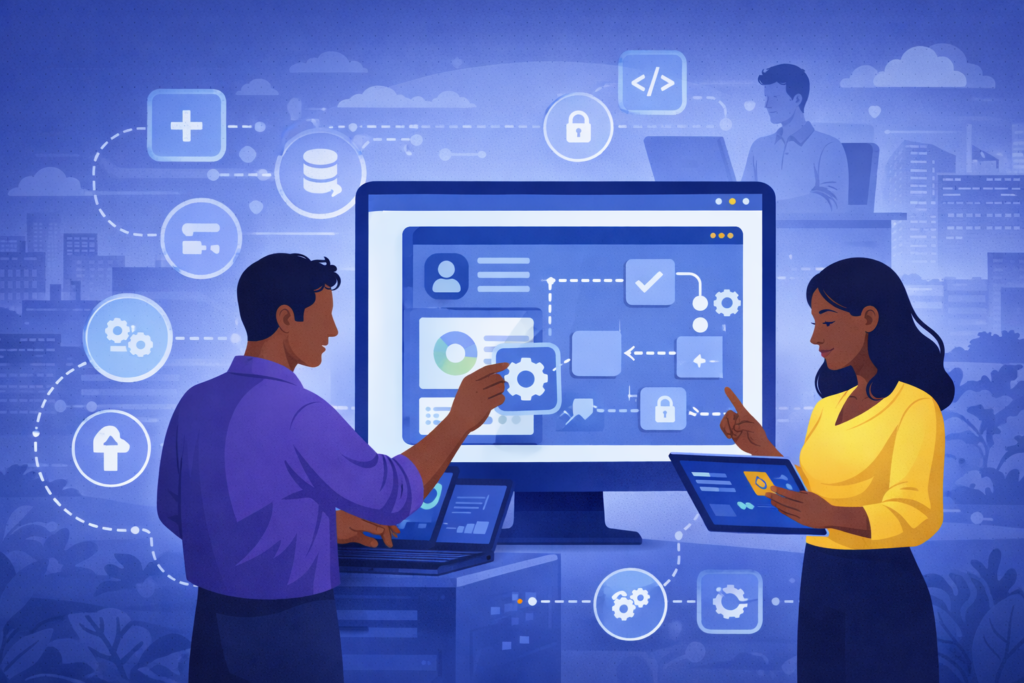
In every organization, there is an “innovation gap.” This is the ever widening chasm between the custom digital solutions your business teams need to improve their processes and the limited capacity of the IT department to deliver them. The result is a long and frustrating IT backlog, where great ideas are forced to wait months or even years to be realized.
A new generation of low code and no code application development platforms is closing this gap. By providing a visual, drag and drop approach to building business applications, these platforms are democratizing development. They empower the people who know the business best, the business users themselves, to build the solutions they need, driving a new era of agility and innovation.
- The Speed Imperative: From Months to Weeks
Traditional software development is a slow and resource intensive process. The cycle of gathering requirements, writing custom code, testing, and deploying can take months. In a fast moving market, this is simply too slow. By the time a solution is delivered, the original business problem may have already changed.
Low code platforms dramatically accelerate this process. By using pre built components, visual workflow designers, and drag and drop interfaces, applications can be built and deployed up to 10 times faster than with traditional methods. This allows your organization to respond to new business needs with unprecedented speed and agility.
- The Rise of the “Citizen Developer”
The most transformative aspect of low code is the empowerment of the “citizen developer.” This is not a professional coder, but a tech savvy business user, such as a business analyst or a department manager, who understands their processes inside and out.
Low code platforms give these users the tools to solve their own problems. They can build a custom workflow to automate a departmental approval process or create a simple application to track project requests, all without needing to write a single line of code. This decentralizes innovation and places the power to improve processes directly in the hands of the people doing the work.
“Business users know their problems best. Low code and no code platforms give them the power to solve them.”
- Freeing Up Your IT Experts for High-Value Work
A common misconception is that low code platforms are meant to replace IT departments. The reality is the opposite: they are meant to elevate them. Low code handles the repetitive, time consuming parts of application development, freeing your professional developers from the pressure of the backlog.
This allows your skilled IT experts to focus on the truly complex challenges that require their deep technical knowledge. They can shift their focus to building robust security architectures, managing complex integrations, and ensuring the core enterprise systems are reliable and performant. IT transforms from a service desk into a strategic enabler.
- Bringing “Shadow IT” into the Light
Every organization has “shadow IT.” These are the unapproved spreadsheets, personal databases, and unsanctioned cloud apps that employees create to solve their problems when official IT solutions are not available. While born from good intentions, shadow IT is a major source of security risks, data silos, and compliance issues.
Low code platforms provide the perfect solution. By giving business users a sanctioned, secure, and governed platform to build on, you provide a safe outlet for their innovative impulses. It brings development out of the shadows and into a controlled environment where IT can ensure that all new applications are secure, integrated, and aligned with corporate standards.
From Bottleneck to Bridge
The innovation gap between business and IT does not have to be a permanent feature of your organization. By embracing a low code approach, you can create a new, more collaborative partnership between your business and technology teams. You can empower your people, accelerate innovation, and build a more agile and responsive organization that is ready for the future.