Beyond the Firewall: Why Your People Are the New Perimeter in Cybersecurity
 November 4, 2025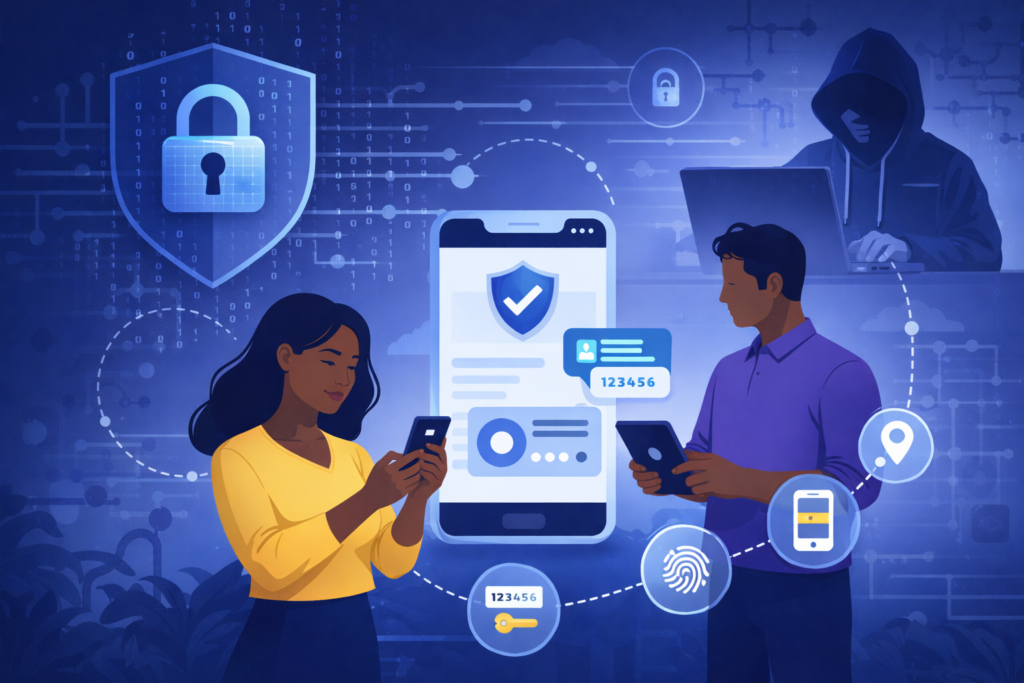
For decades, the dominant model for cybersecurity was the fortress. We built strong digital walls around our organizations with firewalls, intrusion detection systems, and antivirus software. The goal was to keep the bad actors out and the sensitive data in. While these technologies remain essential, the nature of the threat has changed.
In a world of cloud computing, remote work, and sophisticated phishing attacks, the new perimeter is no longer your network; it is your people. The vast majority of modern cyberattacks do not start with a brute force assault on the firewall. They start with a single compromised employee credential. This makes a proactive strategy for managing digital identities and access the most critical pillar of any modern security program.
- The Power of a Single Password
Hackers know that the easiest way into a secure network is not to break down the door, but to simply find a key. Phishing attacks, where employees are tricked into revealing their usernames and passwords, are the number one cause of major data breaches.
Once an attacker has a valid set of credentials, the fortress walls become irrelevant. They can often log in from anywhere in the world and appear to the system as a legitimate user, gaining access to sensitive files, financial data, and customer information. This is why a simple password is no longer a sufficient defense.
- The Non-Negotiable Need for Multi-Factor Authentication (MFA)
The single most effective defense against credential-based attacks is Multi-Factor Authentication (MFA). MFA requires a user to provide a second form of verification in addition to their password, such as a one-time code from their mobile phone or a biometric scan.
Even if an attacker successfully steals a user’s password, it is useless without this second factor. Implementing MFA across your organization is not just a best practice; it is one of the most impactful security measures you can take to protect your business.
“A password proves you know something. Multi-Factor Authentication proves you are who you say you are.”
- The Principle of Least Privilege
Once a user is authenticated, the next critical question is: what should they be able to access? Many organizations make the mistake of giving employees overly broad access to systems and data that are not relevant to their specific job function.
This creates a massive and unnecessary risk. A compromised account with broad permissions gives an attacker a wide field to operate in. The “Principle of Least Privilege” is the practice of giving every user the absolute minimum level of access they need to perform their job, and no more. A centralized Identity & Access Management (IAM) system with role-based access control is the essential tool for enforcing this principle at scale.
- The Importance of a Centralized View
In a complex organization, managing user access across dozens of different applications can become a nightmare. An employee might change roles but retain their old access rights, or an account might not be properly deprovisioned when someone leaves the company. These orphaned accounts are a major security risk.
A centralized IAM platform provides a single command center to manage the entire identity lifecycle. It automates the process of granting and revoking access as people join, move within, and leave the organization. This provides a clear, auditable view of who has access to what, and ensures that permissions are always kept up to date.
Securing Your Human Perimeter
While traditional network security remains important, the modern threat landscape demands a new focus on the human perimeter. By implementing a strong strategy for identity and access management, including the mandatory use of MFA and the principle of least privilege, you can build a more resilient and secure organization that is ready to face the challenges of the digital age.